Thursday, 30 January 2014

OUGD505 - Design Production 2 - Study Task 1 Research OBSOLETE

An introduction to the life of Louise Fili

For my chosen subject, I have decided to research into the life and work of Graphic Designer and Typographer, Louise Fili. Fili is a big inspiration to my work, and many of my other idols' inspiration, too. The re-ignition of the Art Deco style in modern graphic design can be somewhat owed to Fili for her beautiful contemporary incarnations of the what would be old-fashioned styles.

Target audience

Target audiences for Fili include anyone who loves type, good food, good wine and a good time. Her work seems to be everywhere in NYC and she is the inspiration and idol of typographers all over the globe.

Louise Fili is a famous American Graphic Designer born in Orange, New Jersey on 12th April 1951. She is most widely known for her 11 years as Art Director of Pantheon Books (Random House) creating over 2000 book covers there.
As the daughter of two Italian schoolteachers, Fili was instantly inspired by her parents' homeland upon her visit there when she was just 16. She is addicted to all things Italy - in particular Italian 1930's typography and design. 
As a graduate of Skidmore College, she began work at Alfred A Knopf from 1975-'76 designing special project books. She then worked for Herb Lubalin from '76-'78 before joining Random House. In 1989 after leaving Random House and many awards and treasures behind, she opened 'Louise Fili Ltd' - the foundations of the company being typography, food and Italy!
In around 1990, she turned her interests to Restaurant design and food packaging. The first customer was the restaurant across the road - 'Prix Fixe'. As payment for her design, she was given an unlimited tab. Some of her customers for her restaurant design work include; Picholine, The Harrison, Noche, Artisanal and Metrazur.
She has been the instructor at the School of Visual Arts for over 20 years. She has also taught at the New School, New York University and the Cooper Union. She also teaches at the SVA Masters Workshop every summer in Venice and Rome. 
Fili has authored and co-authored many books with her husband, Design Historian Steven Heller. A list of her books include (via Wikipedia):
  • (With Steven Heller) Italian Art Deco: Graphic Design Between the Wars, San Francisco: Chronicle Books, 1993.
  • (With Steven Heller) Dutch Moderne: Graphic Design from De Stijl to Deco, San Francisco: Chronicle Books, 1994.
  • (With Steven Heller) Streamline: American Art Deco Graphic Design, San Francisco: Chronicle Books, 1995.
  • (With Steven Heller) Cover Story: The Art of American Magazine Covers 1900–1950, San Francisco: Chronicle Books (San Francisco, California), 1996.
  • Logos A to Z (self-published) 1997.
  • (With Steven Heller) British Modern: Graphic Design Between the Wars, San Francisco: Chronicle Books, 1998.
  • (With Steven Heller) German Modern: Graphic Design from Wilhelm to Weimar, San Francisco: Chronicle Books, 1998.
  • (With Steven Heller) Typology: Type Design from the Victorian Era to the Digital Age, San Francisco: Chronicle Books, 1999.
  • More Logos A to Z (self-published) 1999.
  • (With Steven Heller) Design Connoiseur: An Eclectic Collection of Imagery and Type, New York: Allworth Press, 2000.
  • (With Steven Heller) Counter Culture: The Allure of Mini-mannequins, New York: Princeton Architectural Press, 2001.
  • Logos A to Z Three, 2002 (self-published)
  • (With Steven Heller) Euro Deco: Graphic Design Between the Wars, San Francisco: Chronicle Books, 2004.
  • A Designer’s Guide to Italy. (self-published) 2004.
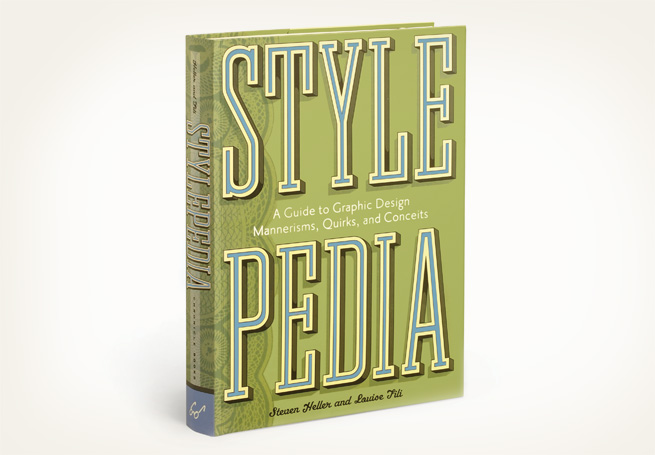
  • (With Steven Heller) Stylepedia: A Guide to Graphic Design Mannerisms, Quirks, and Conceits, San Francisco: Chronicle Books, 2006.
  • The Civilized Shopper’s Guide to Florence, New York: The Little Bookroom, 2007.
  • (With Lise Apatoff) Italianissimo: The Quintessential Guide to What Italians Do Best, New York: The Little Bookroom, 2008.
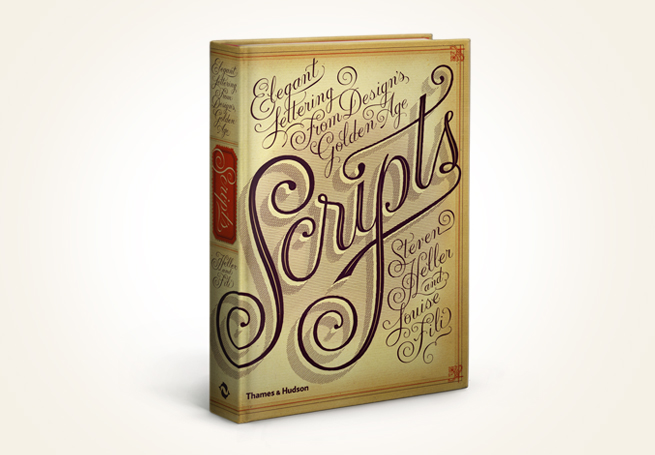
  • (With Steven Heller) Scripts: Elegant Lettering from Design’s Golden Age, London: Thames and Hudson, 2011.
  • Elegantissima: The Design and Typography of Louise Fili, New York: Princeton Architectural Press, 2012.


Her list of awards include: Gold and silver from the New York Art Directors clubs & Society of Illustrators, The Premio Grafico from the Bologna Book Fair and she has also been nominated 3 times for James Beard. 
In 2004 she was added to the Art Directors Hall of Fame. She is also an elected member of the Alliance Graphique Internationale. The list is endless!

Louise Fili on the importance of food packaging:


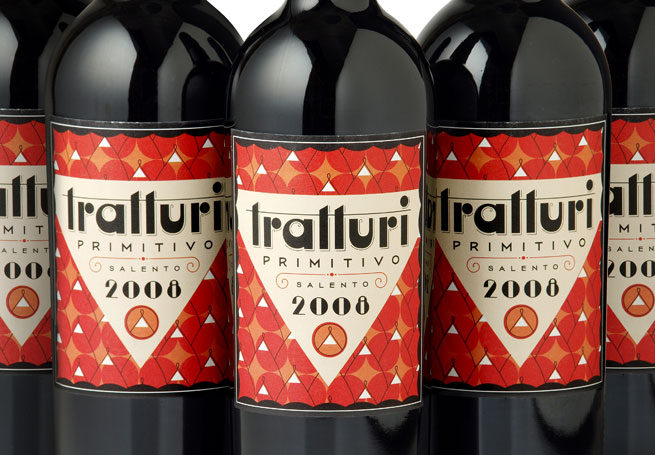
Some of her designs:


 This is one of the copyright & acknowledgements pages from one of her books - very creative!


Fili's own Graphic Design 'autobiography', Elegantissima, was co-authored by herself and her husband, Steven Heller.

The Amazon description of the book reads:

"Her lavish and elegant typography, often hand drawn, helps advertise and market such well-known brands as Sarabeth's, Bella Cucina, Jean-Georges, and Good Housekeeping, among many others. Known for her intense attention to detail, her fresh reinterpretation of vintage sources, and her passion for all things Italian, Fili has won numerous awards. Elegantissima, the first monograph on her work, covers the breadth of her nearly forty-year design career and is a must-have for graphic design students and professionals, as well as anyone interested in advertising, food, restaurants, Italy, and books."

On 7th December 2013, an exhibition, also named Elegantissima was hosted by Farmingdale College:


It's a great exhibition that helped the viewer to visualise not only the rightful place, but the inspiration of her works. It also shows the range and the flexibility of the usage of her designs by using patterns as wallpaper, colour schemes in furniture and dotting the area with her beautiful food packages and books. Although distinct in style as in era, it is hard to believe that it was all designed by the same person and the vastness of her design styles.







Video Interview with Louise Fili

Here, a design student interviews Fili about her work and the design process:


Because both her parents are from Italy, she describes going to Italy for the first time as being the ultimate inspiration. She fell in love with the food and graphic design!
She also mentions that 'the sketching stage [of the design process] is very important', because she says it allows the typefaces to form almost by themselves.
She also claims to 'hate repeating' herself in terms of design work, particularly if set a similar brief, but loves the challenge of competing with her own designs.

Video Interview with Jessica Hische


In this video, typographer and illustrator Jessica Hische talks about her inspiration from Fili after working for her for 2 and a half years.


Inspiration of Louise Fili

To inspire my own designs in the same way, I am looking at the inspirations of Fili so as to not try to directly replicate her work!

In this article on the Design Observer Group, we take a look through Fili's collection of Italian 1930's decorative tins:


At first glance, the colour schemes of these tins is the most distinctive influence: mustard, teal and creams paired with thick black/ brown outlines and interesting shapes create the perfect background for these designs. The next thing to be noted is obviously the typography - the identity of the era. From elongated capitals to scripts that look like they were laid down out of ribbon, all united under the flat-colour palette. Fili obviously brings these designs into the 21st century by lessening on the harsh outlines and introducing gentle gradients, that also add to that expensive quality feel.

Further inspiration:


http://media-cache-cd0.pinimg.com/736x/25/fa/f5/25faf5a12d741e7979bdc5e6aeebd302.jpg


Behance.net


http://www.underconsideration.com/quipsologies/


http://artdecoblog.tumblr.com/


http://www.flickr.com/photos/maraid/2268693871/in/set-72157594234429063


http://www.presentandcorrect.com/blog/category/packaging


https://www.behance.net/gallery/La-Diplomate/10326055


http://www.pastiglieleone.com/en


http://www.thedieline.com/blog/2010/11/29/vintage-packaging-coffee-from-the-1800s.html


http://www.thedieline.com/blog/2010/10/15/vintage-packaging-miscellaneous-products.html


Editorial and Layout Design

My chosen concept so far combines the work and life of Louise Fili in an editorial/ magazine layout design. Perhaps I can create a zine to honour quality designers work. I could maybe use some quotes etc.

My strengths in my skills however are definitely more into the illustration and typographic aspect as opposed 


https://www.behance.net/gallery/RANE-IL/3716596

The background of the right hand side design inspired me as it is similar to something of Fili's, but the modernist foreground is a nice way to label it in a different style.


http://www.achadosdabia.com.br/2012/08/28/tem-materia-minha-na-womens-health-%E2%99%A5/

I like the drawing and writing as if it were straight onto the photograph. The colours also caught my eye.


http://jessicahische.is/empoweringladies

The combination of 30s style script type and sturdy modernist layout with an unusual colour scheme ensures that the piece can be inspired by Fili, but not copied.


This design caught my eye as it was similar in style to that of Fili's work - but still had modern components and wouldn't be confused with Fili's work.

http://ashleynicole.ca/portfolio/portfolio-cigars-under-the-stars/


I feel like this is the perfect balance between script type, image and layout.


Really love the fact that the type almost becomes a subtle pattern and the photograph is not interfered with too much!


The similar colour styles and use of black and white photography would incorporate the colours of Fili's work and the only portraits available of her online.


I like this way of annotating - almost like labelling the pattern in the background. One of Fili's packaging designs could be treated this way in my layout.


I'm trying to think of different ways to commemorate Louise Fili and what typography I can put together to celebrate that.

It would be most appropriate to honour Fili's work with packaging design or a book, but I feel like the less obvious option of double page spread magazine design is a little unusual and unexpected therefore interesting? I'm still playing around with ideas.

**9th February 2014 amendment**

Because of the limitations regarding the research into Louise Fili and the conflicts with her work into branding, packaging, and even exhibition work and the requirement for this project to create a publication, I've had to broaden my research into other artists and festival stationery to create design for a fictional design festival centred around Italian / art deco / script type.

2nd Designer - Jessica Hische

Born in 1984 in Pennsylvania and raised by who she calls 'non creatives', Jessica Hische's parents put their faith in her to pursue a career that was 'seemingly impractical'.
After graduating from Tyler School of Art with a degree in Graphic Design in 2006, Hische went to work for her ultimate idol - Louise Fili! Alongside this, she worked on a project called 'Daily Drop Cap' increasing her knowledge and skills on lettering and letterform design to an elite level.
Since 2009 she has worked for herself collaborating with many designers such as StudioMates and Pencil Factory whilst spreading her living arrangements between Brooklyn, NY and San Francisco.  She set up a collaborative space with typographer Erik Marinovich and has been working on beautiful script / art deco designs ever since.

Her main categories of work include: advertising, book covers and editorial work, to branding and identity design. She has been known to work with Fili on book covers and editorial work.

Examples of her work:


*** THIS RESEARCH POST IS NOW OBSOLETE AS I DISCOVERED IT WAS INAPPROPRIATE FOR WHAT WE NEEDED IT FOR. It greatly limited the design outcomes for studio brief 2, and so a change into direction to Mongolian/ Kazakh yurts was made***

Saturday, 25 January 2014

OUGD503 - Responsive - Verity Taylor Wedding Stationary Research

Responsive - Verity Taylor Wedding Stationery Research

I interviewed my cousin Verity for possible ideas regarding her wedding stationery. Here are a list of things we discussed:

Verity & Math

  • Loves the outdoors/ outdoor life
  • Loves fashion - Joules, Crew, Fat Face
  • Floral patterns
  • Is very family orientated
  • Loves their horses & preparing to show them
  • Loves classic clothing/ objects 
  • Loves quality and English heritage


Wedding ideas

  • Parcel paper
  • String/ raffia/ bass
  • Scotch horseshoe


Bouquet

  • Sunflowers
  • Gerberas
  • Sunflowers
  • Roses


Things to include (possibly)

  • Seating plan
  • Place names
  • Table names
  • Order of service
  • Favours (?)


Details:
Saturday 25th April 2015
1.00pm, St. Matthew's Church, Stretton

7.30pm at Tatton Park
Carriages at midnight

Colours

  • Cornflower blue
  • Mustard yellow


To answer her heritage background, I think a logo/ emblem for the couple could brand across the entire stationery set.


Tuesday, 31 December 2013

OUGD501 - Essay - Capitalism and the Consumer - First Draft


Capitalism and the Consumer

“When waiting is taken out of wanting, and wanting taken out of waiting, the consumptive capacity of consumers may be stretched far beyond the limits set by any natural or acquired needs or determined by the physical endurability of the objects of desire” - Bauman, Z. (1998) p.25
This essay will attempt to explore 21st century living in the first world from both active and passive consumer attitudes. In a time where we are taught and brought up to believe that our purpose is to buy, enjoy, consume and discard - what effects does this have on society’s psyche? Why do we buy? Do we ever, as a culture, recognise our status as the imperative cog in the Capitalist machine? If so, do we ever feel concerned about our actions, or do we simply not care? It will attempt to justify our everyday actions in this society, and show how our almost entire lives are dictated by the endless cycle of consumerism.
It can be said that the current consumer culture lifestyle is the most prominent it has ever been- and is intrinsic from that of it’s preceder, the modernist era in around the 1880’s to the 1920’s, after the foundations were built by the industrial revolution in the Victorian era. As Shenhav, Y (1999) P. 20 states; ‘the factory system was established, capital was centralized, production standardized, organizations bureaucratized, and labor incorporated in large firms’ . The transition from small, family-owned workshops and high street boutiques to mass factories with complex machinery made it eminent that the social dynamic of which workforces conducted would change- and it did! This elaborated into more organized established social systems within employment facilities and thus changed our attitudes to work. ‘The rise of large scale corporations employing thousands sometimes tens of thousands of workers, made corporations bureaucratically complex and hierarchically integrated (firm owners increasingly pushed away contractors, who until then controlled the production process and gained control of the workers, of the firing and hiring)’ -Illouz, E (2007) p.11 - this shift in control made it so that the workplace was more about social dynamic over ability necessarily, thus making the workplace more suited to the daily existence in the office at the computer.
This shift in attitude to employment coincided with the modernist movement and the new ecosystem of city living. New pleasures and ideas of recreation started to emerge at the hands of the hard earned disposable income - especially notable after the World Wars. The monotony of the long hours in the office or on the assembly line doesn’t produce the same fruit of the labour in the Georgian/ Victorian quaint workshop - the reward of this lifestyle is the income. 
‘The role once performed by work in linking together individual motives, social integration and systematic reproduction has now been assigned to consumer activity’ - Bauman, Z. (1998) p.27.
Now fast forward into the twenty first century, and this recreational response to the working life has advanced into a lifestyle all by itself - consumerism. It is now almost detached from it’s original justification of rebound from work - it doesn’t matter if you earn or not, what age you are or what background you come from. As a society under Capitalism’s watchful eye, our culture dictates our lifecycle of wanting and buying. Many people do not feel the consequences and impacts of this - for consumerism is a way of life, for many of which have been raised into. Examples of consumerism being celebrated as recreation can be seen all over the Western World - romanticized shopping centres such as the Trafford Centre and Leeds Trinity shopping centre, and holidays such as Christmas that requires individuals to acquire commodities for fellow loved ones as routine rather than genuine impulse gifts. The irony of shameless Black Friday Sales a day after the Thanksgiving holiday are a prime example of consumer attitude coinciding with traditions.
There are a number of reasons that the consumerist culture continues to thrive and has been accepted by many as the norm. Aside from the fact that consumerists are now in the routine and no nothing different from their current lifestyle, there is the constant task of keeping the consumerist, or ‘market’ interested. As explained by Bauman, Z. (1998) p.26 “[consumers] need to be constantly exposed to new temptations in order to be kept in a state of a constantly seething, never wilting excitation and indeed, in a state of suspicion and disaffection”. This endless cycle of trend is a result of marketing and advertising firms, (often begrudgingly - as stated in the First Thing’s First Manifesto) relentlessly inventing new hooks to keep the market flowing and stocks up. 
An object built for the consumerist market must be attention grabbing, but not attention holding, to leave room for the consumerist to be willing to buy again once the object has been used up. “Ideally, nothing should be embraced by a consumer firmly, nothing should command a commitment forever, no needs should ever be seen as fully satisfied, no desires considered ultimate” - Bauman, Z. (1998) p.25 Especially if it is a rather frivolous commodity like an Electric Spider Suction Arm as opposed to something essential like bread or toilet paper, the job of the marketing agency is to sell the consumer something they didn’t know they wanted - possibly even letting them believe that they need it, in fact. This can be said for a variety of objects throughout fashion, and the gadget industry. A prime example of a product development scheme designed for the consumerist market is the iPhone. “Marketers must continuously evaluate and innovate, since no product or service can remain the same forever and still be desirable” - Mink Rath, P, Bay, S, Petrizzi, R, and Gill, P (2008) p.7 A new design of iPhone is released sometimes more than once per annum, yet advertised as being newer and therefore better. The users can trade in their previous models as a part exchange on the newer models; this keeping them hooked in the loop. However, for example, the differences between the iPhone 4 and the iPhone 4S are so minimal and yet it is marketed as being more innovative and quintessential to obtain, leaving the user unsatisfied with their current older model.
The repetition of this marketing scheme grows tiresome for a small few; “Cultural fashions dynamite their entry into the public vanity fair, but they also grow obsolete and turn ludicrously old fashioned even faster than it takes to grasp public attention” - Bauman, Z. (1998) p.28 - and sometimes alternatives are started by the people themselves.
Although trends in fashion and products are customary in consumerist culture, in an effort to feel more significant in modern/ post modern times, there is a popular strive to be ‘unique’ and ‘individual’ in your identity. “Modernity charged the individual with the task of ‘self construction’” Bauman, Z. (1998) p.27. So numerous subcultures can be observed, the majority of which are unfortunately style without substance because this post modern vision of identity is still built on the foundations of consumerism, of what you wear and the products you obtain as opposed to the skills you have and your personality. “The roads to self-identity, to a place in society, to life lived in a form recognisable as that of meaningful living, all require daily visits to the marketplace” - Bauman, Z. (1998) p.26 This is a reflection of the city lifestyle in which an individual aspires to stand out from the crowd - quite literally in this case, to communicate their personality visually. This dissenting attitude is also bore from the invariability of the products in ‘chain’ shops - the shops that mass produce and dictate the trends and styles of the current. The most popular of these dissenting attitudes is the ‘Vintage’ style, the act of buying old, secondhand clothes from bygone eras and combining the different items into different eccentric outfits. The outcome of this are usually unique items at relatively low prices. However, the irony of which has become a style/ trend all on it’s own, and replicas of these different styles are now being mass produced once again in the chain stores. This idea of different styles rebounding off of different individuals has been embraced by the consumerist culture and is now just another way of seeking inspiration for new trends: “Designed goods have a special place in the minds of consumers; this is largely driven by a combination of two conflicting behaviors: wanting (then buying) what the rest of the crowd wants, and seeking (then purchasing) what’s truly unique and innovative. Mink Rath, P, Bay, S, Petrizzi, R, and Gill, P (2008) p.25
The many different attitudes to consumerism, they can be divided into passive and active consumerist attitude. The passive consumerists being those who shop for recreation, that compulsively buy, hoarders, and those who constantly upgrade their mobile phones, for example. The active consumerists are the visual subcultures, such as the Vintage stylists, who made an effort to break out of the consumerist regime, even if eventually proven unsuccessful.
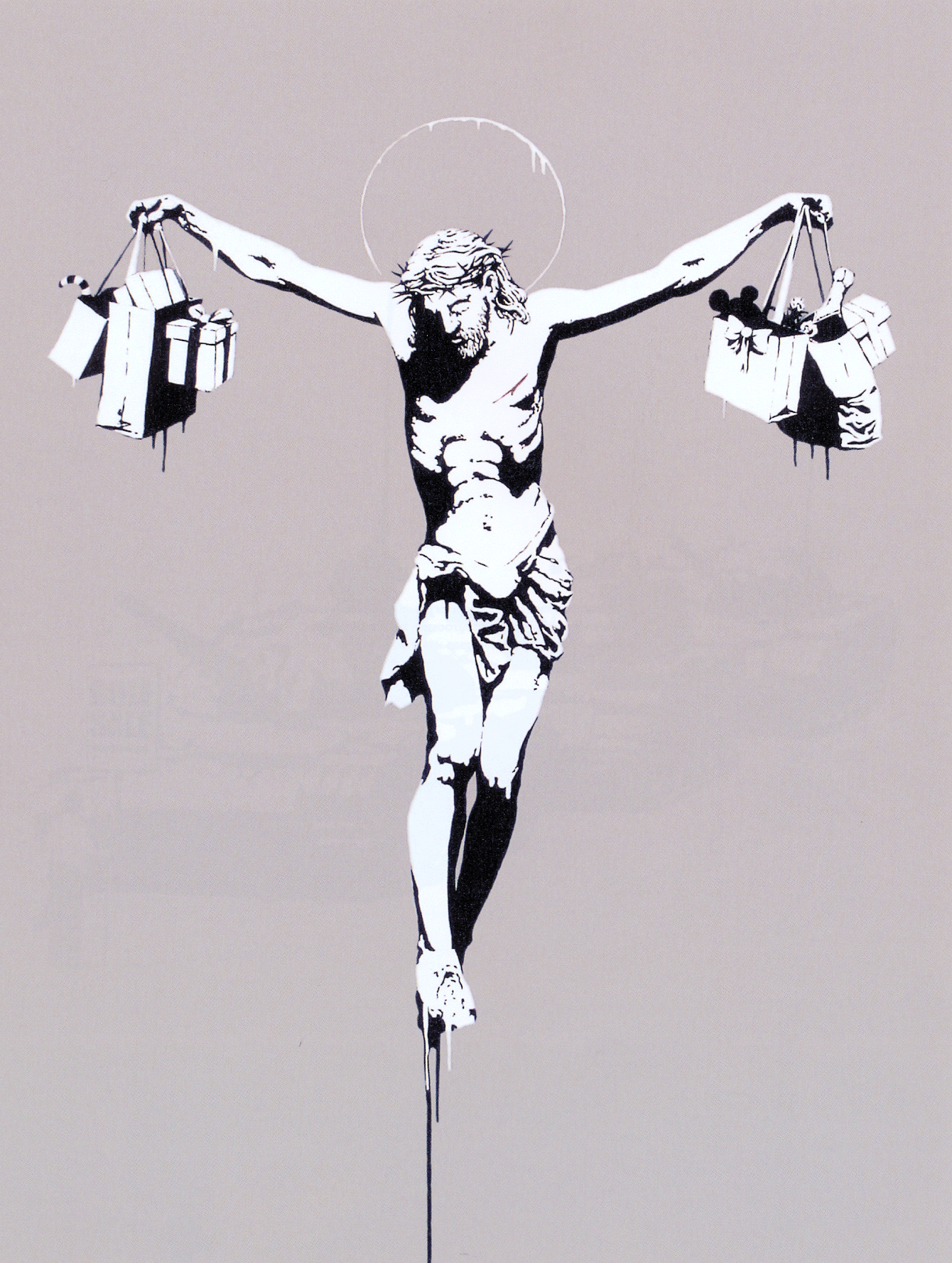
There have been many contextual references to consumerism in art and design, such as Barbara Kruger’s ‘I shop therefore I am’ (fig.1)- showing her awareness of how post modernism and consumerism leads us to believe our identity is built on the grounds of what we own. The irony of this is a similar style of artwork was used as interior shop decor for mass department store Selfridges - blatantly expressing an anti-shopping attitude whilst the shoppers rushed around beneath it - displaying the impenetrable force of this current lifestyle [see images below]. Street artist Banksy often comments on consumerist culture, juxtapositioning images of religious leaders such as Jesus Christ, with plastic shopping bags in his hands on the cross (fig.2), perhaps commenting on the Christian saying that ‘Jesus died for your sins’. Another piece puts the image of the girl from the Napalm bombing in the Vietnam War holding hands with consumerist mascots Disney’s Mickey Mouse and McDonald’s Ronald McDonald (fig.3). This contrast again suggests the sacrifices and pain of others that have been made for the frivolous consumerist environment of the western world. In around 2006, Banksy saw a surge in the popularity of his work, as his comments started to be widely noticed and recognised as having valid opinions. The irony of this was that it started - unsurprisingly, a trend in the market and soon, cheap prints of his street art could been seen on canvases in chain shops across the UK. With his sardonic sense of humour, Banksy has stated that he doesn’t care for Capitalism and that through his artwork he tries to encourage an anti-Capitalist movement within the people: ‘We can't do anything to change the world until capitalism crumbles. In the meantime we should all go shopping to console ourselves.’ Banksy, (2006), p.204.
We realise the origins of consumerism, we know why the average citizen is relentlessly drawn back into the consumerist loop, but what is the significance of all of this? Why does the driving force behind this lifestyle cease to rest? It’s because the capitalist system needs the consumerist lifestyle to sustain itself. As Nicholas Johnson once said, “It used to be that people needed products to survive, now products need people to survive”. Corporate giants such as Disney, Time Warner, Wal Mart and Toyota, to name a few, thrive off the indirect contributions from the shoppers who purchase their merchandise. This is of great importance because these companies own such a large scale of the planet, Time Warner owning not only DC Comics, Looney Tunes, Cartoon Network, CNN, Time magazine and AOL to HBO, Country Life magazine and Woman’s Own, for instance. By purchasing new products every day, in the same way one would pay taxes to the government, the consumer contributes to the current Capitalist system. Is there a danger to this subliminal need to constantly obtain products? It can be argued that there is a certain thrill that temporarily fills a previously unsatisfied void after the purchase of a beautiful new dress, or the latest gadget: “there is a lot of fun living through an experience one did not even know existed and was available” - Bauman, Z. (1998) p.25. However, although the literal danger of this routine is trivial; the consumerists house becomes full of products they don’t need, it’s the carelessness of this thrill affects the bigger picture. 
There are positive and negative points to this; negative points being the ecological impacts the buying cycle has on the planet. The system largely supports sweat shop culture with underpaid, unhealthy working conditions and is also very wasteful. Most of the products are largely non-recyclable or non-reusable, which is exhausting the planet’s resources. A story consumerists are all too familiar with; ‘Despite a 30-percent increase in resource efficiency, global resource use has expanded 50 percent over the past three decades. And those numbers could continue to soar for decades to come as more than 5 billion people who currently consume one tenth as many resources per person as the average European try to follow the trail blazed by the world’s affluent.’ Flavin, C Worldwatch Institute (2010) preface, xvii. The positive points can be justified in that the people’s income can be spent how they wish it; and that this brings them happiness that as a society we could not get from entertainment that satisfied other eras. Although, this is not strictly true, the happiness and enjoyment from products is only temporary.
But what are solutions to this problem? It seems that because we are now a complete generation of consumers, and our system makes the entire planet function on a daily basis that therefore makes it successful? It is inevitable that change must be made, even if it’s just changing this disaffiliated mindset. It is difficult to find an immediate solution because consumerism has been built around our living environments and our everyday lives. 
A suggested solution to this would be the gradual introduction of a complete alternative to the Capitalist- Consumerist system: one that dismisses the consumerist notion of undermining the idea of a healthy lifestyle, that introduces a sustainable lifestyle as a ‘natural’ thing to have, that encourages public consumption like transport and parks instead of private consumption as recreation, for example. It would also have to quintessentially support the abolition of products that either cannot be recycled or cannot biodegrade, unless these were products that are built to last, in which case would be encouraged to ‘make do and mend’ and share among generations. This may sound bleak to some, but this system would shift the focus of consumption as recreation, and fill the gap with something that is more sustainable. This would take many years, but would eventually prove successful, as the main growth of consumerism has been in the past 200 years, it could be hypothetically turned back around in this time.
Even now - there are numerous activists that realise the current state of affairs and are fighting for change: ‘While sustainability pioneers are still few in number, their voices are growing louder, and at a moment of profound economic and eco- logical crisis, they are being heard. As the world struggles to recover from the most serious global economic crisis since the Great Depression, we have an unprecedented opportunity to turn away from consumerism.’ Flavin, C Worldwatch Institute (2010) preface, xviii. Many companies such as beverage giant The Coca Cola Company, are changing their packaging from more sustainable backgrounds, because they realise the colossal mass their company contributes to the problems with consumerist society: ‘Of our beverage volume, 61 percent is delivered in plastic bottles made from polyethylene terephthalate, better known as PET plastic. Consumers like PET bottles because they are lightweight, resealable, shatter-resistant and accepted in most community recycling systems. We like PET bottles because the processes for making and transporting them are relatively energy-efficient and cost-effective, and PET protects our product quality exceptionally well.
But with increasing pressure on natural resources required to make conventional PET bottles—particularly on petroleum and natural gas—we need alternatives. That is why we are aiming to source 25 percent of our PET plastic from recycled or renewable materials by 2015.’ - Kent, M and Perez, B for The Coca Cola Company (2012) [web]. Other companies such as Fair Trade are ensuring that the system doesn’t favour the consumers, and treats the producers fairly, too.
In conclusion, consumerism is a system that has been introduced and has grown over many years, and become a deep seated patrimony in today’s society- which will take a lot to undo. But it is evident that change is needed, as the world’s economy and ecological system cannot withstand the pressure. Awareness needs to be raised for those who do not realise the affects of the consumerist system, and those who know and do not care need the importance of their actions to be made clearer. All of our efforts will be needed to bring about change for this system, for it is becoming obsolete. 

‘In the end, the human instinct for survival must triumph over the urge to consume at any cost.’ Flavin, C Worldwatch Institute (2010) preface, xix

Bibliography
Bauman, Zymunt (1998) ‘Work, consumerism and the new poor’, Buckingham; Open University Press

Shenhav, Yehuda (1999) ‘Manufacturing Rationality’, New York: Oxford University Press

Illouz, Eva (2007) ‘Cold Intimacies: The Making of Emotional Capitalism’, Polity Press

Mink Rath, P, Bay, S, Petrizzi, R, and Gill, P (2008) ‘the why of the buy - consumer behavior and fashion marketing’, New York; Fairchild Books

Banksy, (2006) ‘Wall and Piece’, Century

Flavin, Christopher, Worldwatch Institute (2010) ‘2010 State of the World, Transforming Cultures from Consumerism to Sustainability.’ WW Norton & Co, New York.
Kent, Muhtar and Perez, Beatriz for The Coca Cola Company, (2012) ‘2011/2012 Sustainability Report’ [Internet] Available from: <http://www.coca-colacompany.com/sustainabilityreport/world/sustainable-packaging.html#section-managing-packaging-to-manage-risk>
Images
Fig.1
Fig.2

Fig.3